
Saving Video Food Recs vs. Writing Lists: An Honest Comparison
Every person I know who travels for food has arrived at the same problem and solved it in one of two ways. They either keep a list — in Notion, in Apple Notes, in a shared Google Doc — or they save the video and trust that they'll remember what the video was about when they're standing on a cobblestone street at 7pm with nowhere to be. Both approaches feel reasonable at the time you adopt them. Both collapse in the same unfamiliar neighborhood, in the same way, for slightly different reasons.
I want to do an actual accounting of this, not a sales pitch for any particular app. I've been running GeoTok, which sits directly in the middle of this problem, for long enough to have thought hard about what each method genuinely gets right, where each one falls apart, and why neither one alone is sufficient. The honest answer is that the failure modes of lists and saved videos are almost perfectly complementary — and that complementarity is what makes the hybrid approach worth taking seriously.
Let me work through this in four parts.
Part 1: The case for writing lists, and where lists go wrong
The list-keeper's argument is straightforward: a list is searchable, portable, and yours. You open the doc, you type the city name, you find the entry. You do not depend on an algorithm to surface what you want, or a platform's saved-video interface to keep working, or your ability to remember which account posted the video you saved eight weeks ago. A good Notion database with a city field and a cuisine tag is, on its face, a more organized system than a folder of TikTok bookmarks.
I kept lists for three years before building GeoTok, and the architecture of my Notion food database was, at one point, genuinely impressive. I had a multi-select field for cuisine, a linked database for cities, a rating property for source credibility, a sub-page for context notes. It worked well for a few months.
Here is where it stopped working.
The context problem. You see a video. A creator is standing in a side street in Seville, it's clearly late afternoon, there's a counter full of something that looks like it's been fried in pork fat, the room is six tables and a fan and the kind of fluorescent light that only exists above a bar that has been open since 1978. You feel a specific thing watching it. You open Notion and type "Seville — old tapas bar, fried something, look like pork fat, 1978 vibes." Three months later that entry is absolutely useless. The name is not there. The neighborhood is not there. The creator handle is not there so you cannot go back and find the video. You have a vague prose poem about vibes, filed under Seville, sandwiched between eleven other entries that say approximately the same thing.
The context that made you want to go to that place lived in the video, not in your description of the video. Your prose summary is always a degraded copy of the original signal.
The address problem. Even when you do write the name down, and even when you look up the address, you're now maintaining a list of text addresses that is divorced from a map. You can paste the name into Google Maps at the moment you want to find it, but that requires knowing you want to find it, which requires remembering it's on the list. If you're in Seville's Triana neighborhood at 8pm on a Thursday and you're hungry, you are not opening a Notion database to cross-reference which of your 80-something entries are currently within walking distance. You're looking at your immediate environment and making a snap decision based on what's visible.
The list fails at the exact moment of highest intent.
The maintenance problem. Lists are a living document that require upkeep you will not provide. When a restaurant closes, the entry doesn't know. When a chef leaves and the kitchen changes, the entry doesn't know. When the TikTok that inspired the entry gets deleted — which happens constantly, because creator accounts get suspended and taken down and pivoted — the entry just sits there, an artifact pointing at nothing. A list, unmanaged, is a graveyard of intent. Most people's food Notion docs, after a year of intermittent use, are roughly 70% outdated entries and 30% things they might actually want to visit.
I am not saying lists are bad. I am saying that the list format solves the organization problem while creating a context problem, an address problem, and a maintenance problem that you will not solve by being more disciplined. You will not be more disciplined. Nobody is.

Part 2: The case for saved videos, and where retrieval fails
Saving the video is the other approach, and it has a genuine advantage the list does not: it preserves the original context. When you save a TikTok or bookmark a Reel, you are keeping the exact signal that told you the place was worth noting — the room, the plate, the creator's energy, the specific moment in the video where you went "I want that." The video encodes everything that text cannot.
TikTok's Favorites feature is probably the most-used passive food-discovery system in the world right now, and it works reasonably well as long as you interact with it exactly never. It gets fuller and fuller, the algorithm does not sort it by city or by date you'll next visit, and there is no search inside it beyond a keyword that tries to match the caption rather than the visual content of the video.
The Instagram saved-folders approach is slightly better — you can create named folders and drop things into them — but the folders still aren't maps, and the folders don't surface to you based on your location. You are still responsible for remembering that you saved something, opening the app, finding the folder, and cross-referencing with your geographic situation.
YouTube food playlists suffer a different version of the same failure. The playlist is a great archive of things you wanted to remember, but a 40-minute video about a city's restaurant scene is not the format you want when you have 25 minutes before a dinner reservation and need to make a decision. You bookmarked it because it looked useful; you'll never watch it again because opening it at the moment you need it requires more time than you have.
Let me make this concrete. You're in Barcelona. It's a Tuesday in late May, around 7pm. You're somewhere near the Eixample grid, the light is that golden-hour pink it does in May, and you want a glass of natural wine and something small to eat before you figure out dinner. You have 2 hours. You know you've saved relevant content because you've spent the last four months building a healthy bookmark collection.
You open TikTok saved. You have 340 items. None of them are tagged by city. The search returns 6 results for "Barcelona" and three of them are things you saved in 2023 that you don't remember saving. One looks promising but the creator's account has been deleted and the video no longer plays. You close the app and walk into the nearest place that looks acceptable.
That is not a niche failure. That is the normal case.
The retrieval-at-point-of-use problem. Saved videos are designed for the moment you're browsing at home, not the moment you're standing in a neighborhood with a specific need. The saving interface and the retrieval interface are built for opposite contexts: quiet, exploratory, unhurried versus active, navigational, hungry. The video platform has no mechanism to bridge these two contexts for you.
The deletion problem. TikTok content gets deleted constantly. Creators leave, get banned, pivot their accounts, delete their older content. If you saved a video in November and the creator deleted it in February, your bookmark is now a thumbnail with no playback. The recommendation is gone. You have a ghost in your saved folder.
The location problem. Even if you find the video, it gives you visual context and enthusiasm but not a map pin. You now have to search for the restaurant by name, hope the search finds the right one, and navigate there separately from whatever app you used to discover it. The discovery and the navigation are two entirely disconnected acts, performed in two different apps, with manual bridging between them.
Part 3: Hybrid approaches people actually try
Given the failure modes above, most people who think seriously about this end up improvising hybrid systems. The most common ones I've seen, with an honest read of their effectiveness:
The screenshot-to-Notes pipeline. You screenshot the video, especially the name or location text, and paste it into a notes app. This preserves slightly more than the Notion text entry because you have the visual, but the screenshot is not searchable by location and is not a map pin. You've now moved the problem from "I can't find the video" to "I can't find the screenshot" with slightly more friction at the point of capture.
The map pin approach. You watch the video, look up the place in Google Maps, drop a pin, put it in a custom list. This is genuinely better than either of the above for in-neighborhood retrieval — when you're standing in Triana and you open your "Seville food" saved-places list, the pins are on a map and you can see which ones are walking distance. The failure here is that this process takes 3 to 5 minutes per entry, requires you to successfully identify the place from the video, and is completely manual. Most people do it for four restaurants and stop when the friction exceeds the enthusiasm.
The spreadsheet-by-city. A Google Sheets workbook, one tab per city, name / type / source / date-saved. This is the most organized version of the list approach and the one most likely to have been created by someone who works in product or operations. It also has exactly the same problems as the Notion database with slightly more friction to maintain. It solves the search problem and makes the maintenance problem worse.
The dual-save. Save the video AND send yourself a Google Maps link. This works if you actually do both steps every time, which requires more discipline than any normal person maintains for a non-work process. After the first week, you stop sending the Maps link and you're back to saved videos.
None of these hybrid approaches are wrong. People use them because they've identified a real gap and are trying to fill it with the tools they already have. The problem is that all of them require manual bridging work at the point of capture, and that manual work has a consistent failure rate under real travel conditions.
Part 4: What actually works when you're standing in a neighborhood
The honest answer to "what works" is not a system that's better at either saving or listing. It's a system where the gap between discovery and navigation doesn't exist in the first place.
When I watch a food video and decide I want to go to that place, the two things I need are: the video itself (so I remember why I saved it and can replay it standing in front of the place), and a map pin (so I can find it in relation to where I am without opening a second app and searching). Everything else — the text description, the rating, the neighborhood context — is useful but secondary. The critical data is video plus location, held together in one record, searchable by city.
The reason lists fail is that they sever the video from the record. The reason saved-video folders fail is that they sever the location from the record. Both approaches drop one half of the pair.
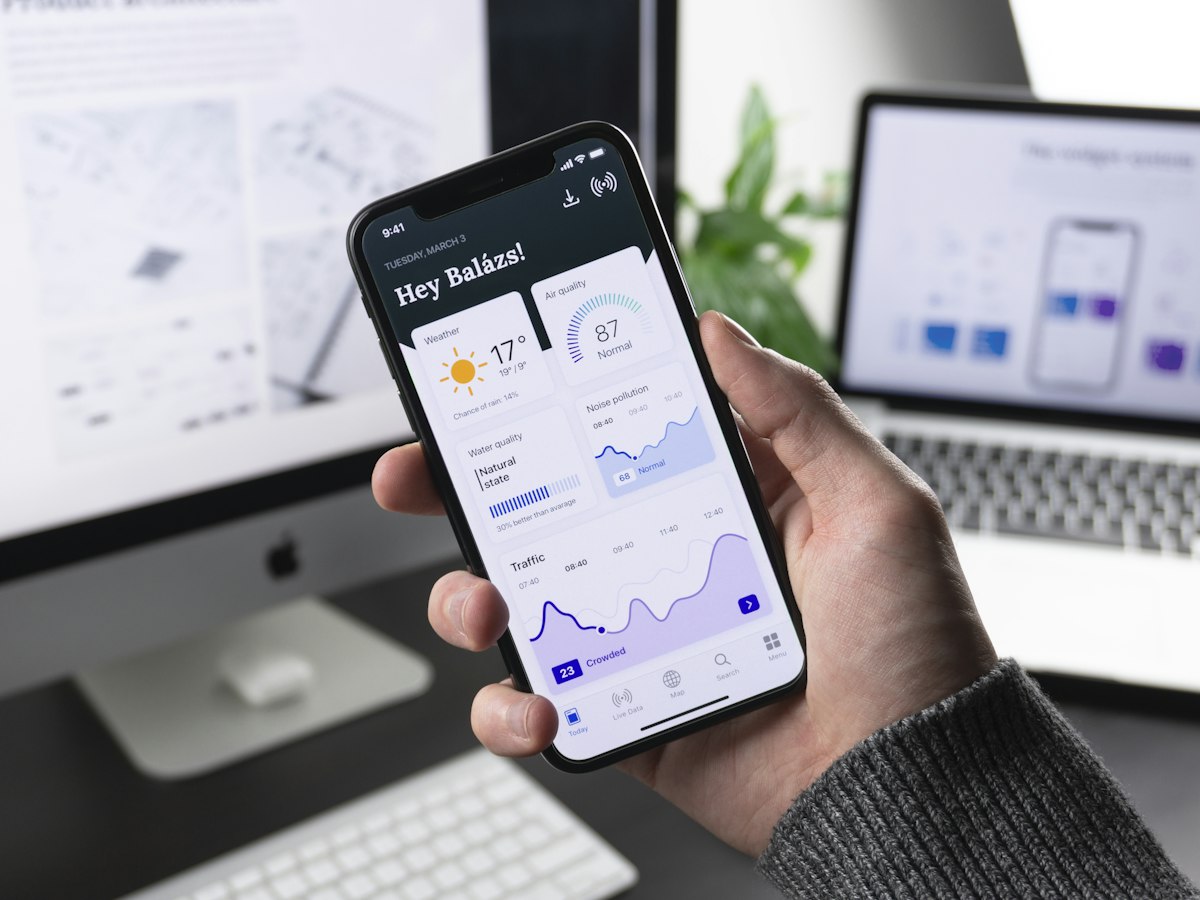
There's also a subtler problem that neither lists nor saved videos address: the difference between discovery context and use context. When you save something, you're in a browsing mode — lying on a couch, scrolling, daydreaming about a future trip. When you need the recommendation, you're in an action mode — on foot, probably hungry, time-constrained, in a specific place. A good system has to work in both modes without requiring you to manually bridge between them.
The Barcelona-at-7pm scenario I described earlier is the acid test. A system that works in that scenario has to do all of the following without any manual entry at the moment of use: show you what you've saved for this city, show it on a map, show it in relation to where you're standing, and let you replay the original video for the 10-second gut check that tells you whether this is still what you want.
The way GeoTok handles this is by treating the video as the primary record and attaching location intelligence to it at the point of save, not at the point of use. When you share a TikTok to GeoTok, it extracts the place, maps it, and stores the video alongside the map record. When you're standing in a neighborhood, you open the city map and see your saved pins. Tap any pin and the source video is right there. You don't need to remember why you saved it, you don't need to search, and you don't need a second app for navigation.
On iPhone
Keep your restaurant ideas in GeoTok.
Save places from food videos and screenshots, then find them on your map when you want to go.
GeoTok Plus subscription required. Some guides are sold separately.
That's the only thing the product is trying to do: eliminate the manual bridging step. Not replace your intuition about where to eat. Not curate the perfect restaurant list for you. Just make it so that when you're in Seville at 8pm and you know you saved something relevant, you don't have to do archaeology through your phone to find it.
I want to be specific about what GeoTok does not do, because the category is full of apps that oversell. It does not follow you, optimize a feed for you, or try to guess where you want to eat. It is not a social network. It is closer to a spatial file cabinet with video playback than it is to a discovery platform. The discovery part still happens on TikTok or Instagram or wherever you're already browsing. GeoTok is the step after discovery — the save-with-context that the native platforms don't provide.
If you use it correctly, your Barcelona map looks like this: 12 pins, each one a restaurant or bar you found through a video, each one playable from the map, each one with whatever metadata the pipeline could extract (opening hours where available, a short place description, a link to the original source). When you're standing in Eixample at 7pm, you open the map, filter to the neighborhood, see three pins within 8 minutes' walk, tap the one that feels right, and replay the 30 seconds of the original video that made you save it. Then you walk there or you don't. That's the whole system.
The underlying question: what are you actually optimizing for?
The list versus saved-video debate gets at something deeper than organizational method. It's a question about what you trust more: your future self's ability to reconstruct context from text, or the algorithm's ability to surface the right video at the right moment.
Neither trust is well-placed, which is why both approaches fail under travel conditions. Your future self is bad at context reconstruction and is also going to be standing in an unfamiliar neighborhood with imperfect information. The algorithm is good at discovery but does not know you're in Barcelona at 7pm on a Tuesday and specifically want something in walking distance.
The people who've abandoned lists in favor of saved videos have made a reasonable trade: they've gained context at the cost of retrieval. The people who've abandoned saved videos in favor of lists have made the opposite trade: they've gained retrieval at the cost of context. Both groups are right that the thing they traded away was a real problem. Both groups are wrong that losing it was acceptable.
What I've noticed, spending time with GeoTok users, is that the ones who stick with it long-term aren't doing so because they love the interface or think it's cleverer than Notion. They stick with it because they've had the experience of standing in an unfamiliar neighborhood, opening the app, and finding the thing they saved six weeks ago directly on a map, with the video intact, with enough context to make a real decision. That experience — the sense that your past self left your present self a genuinely useful note, not a degraded text fragment — is the thing both lists and saved videos are trying to provide and neither one actually delivers.
The Barcelona-at-7pm test is not a metaphor. It's the real benchmark. Any system for tracking food recommendations from video content either passes it or fails it. Lists mostly fail it because the context is gone and the location isn't mapped. Saved-video folders mostly fail it because the retrieval interface isn't spatial and the content gets deleted. The systems worth using are the ones that were built specifically to pass it.
That's an honest comparison. Lists are better than nothing. Saved-video folders are better than nothing. Neither is as good as a system that keeps the video and the map pin together, in the same record, searchable by city, accessible when you're standing in the place you need it.
Analysis published May 2026 by Aleks for GeoTok. For more on how the platform approaches food discovery, see the GeoTok blog.